
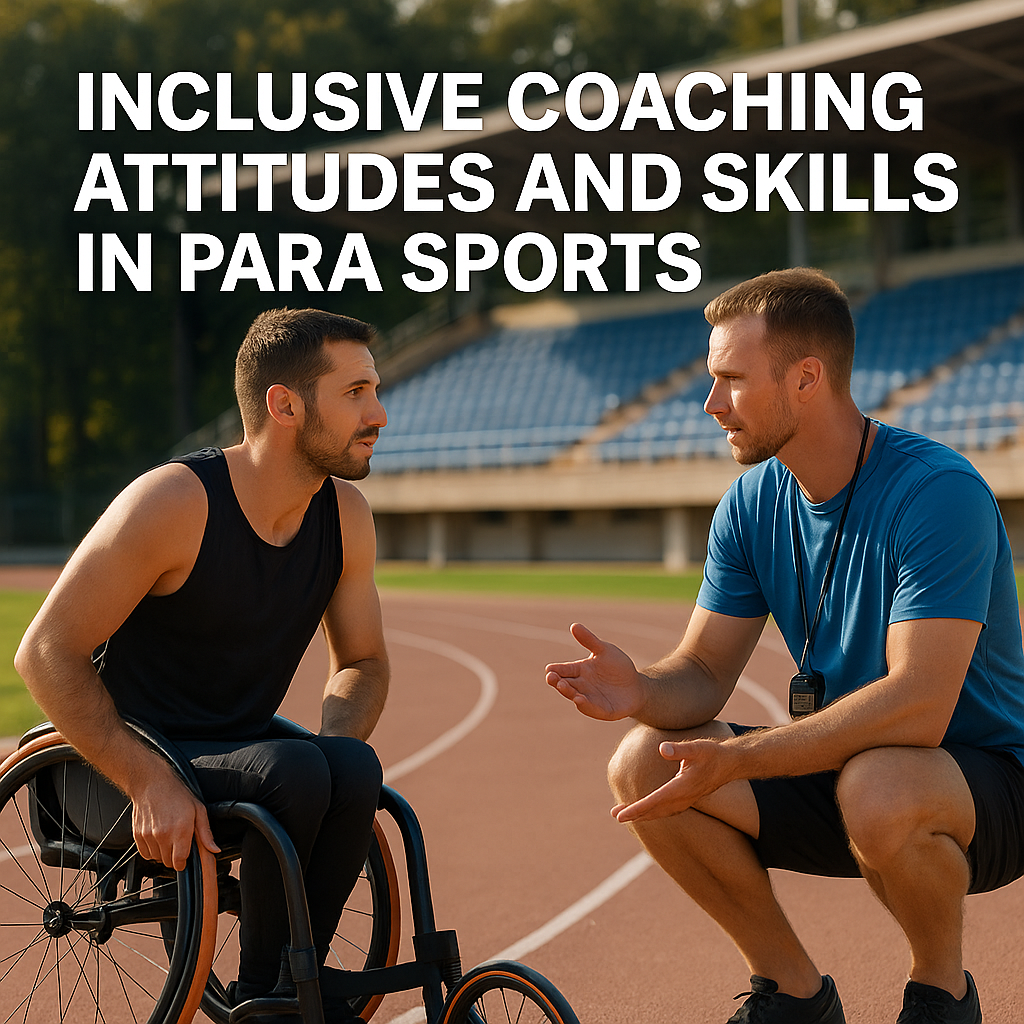
Inclusive coaching in para sports goes beyond just adapting workouts—it’s about cultivating respectful, empowering relationships that honor each athlete’s unique abilities and drive performance improvements.
Introduction
Para athletes represent a diverse array of physical, visual, and intellectual impairments. Coaches must combine empathy with expertise to create environments where all athletes can learn, grow, and excel on their own terms.
Key Concepts
Respect & Equity
Treat every athlete’s goals and challenges as equally important.Empathy & Understanding
Seek to understand each impairment’s impact on movement and learning style.Open Communication
Use clear, adaptive language—verbal, visual, and tactile—to ensure instructions are received.
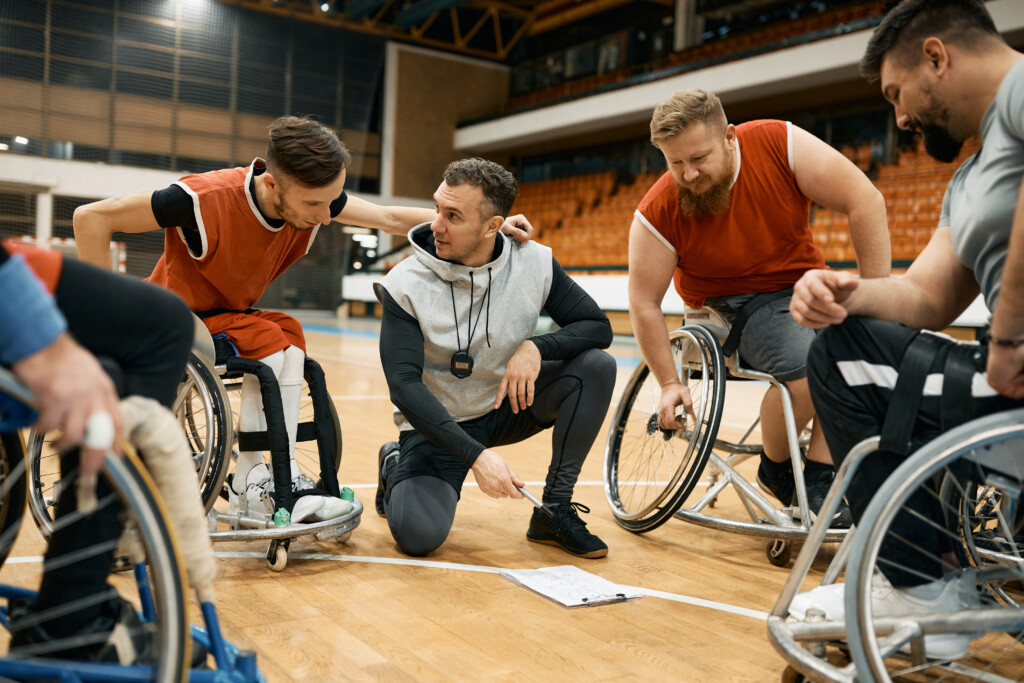
Coach and athlete reviewing movement adjustments together during a wheelchair basketball session.
Essential Coaching Skills
Individualized Planning
Design drills that align with each athlete’s classification and functional profile.Assistive Tech Integration
Leverage wheelchairs, prosthetics, or visual guides seamlessly in training.Injury Prevention Awareness
Recognize sport‐specific risks and modify exercises to protect vulnerable joints.
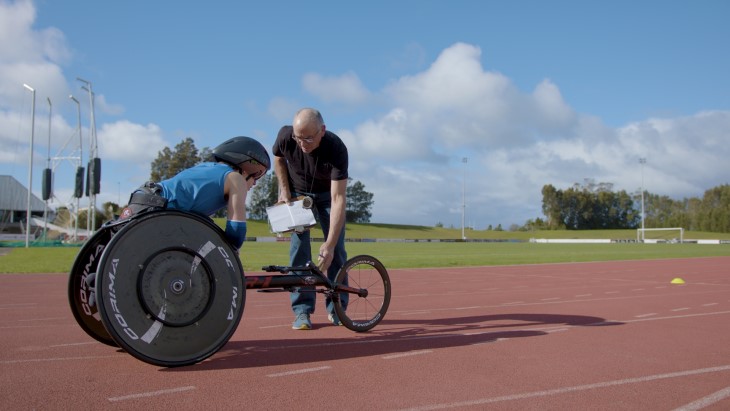
Coach guiding a handcyclist through technique adjustments on the track.
Examples in Action
Seated Circuit Training
A sitting volleyball coach adapts plyometric drills using resistance bands at wheelchair height.Visual Cue Drills
Paralympic swimmers use brightly colored lane markers and tactile signals for starts.Real‐Time Feedback
Coaches provide immediate posture corrections via gentle tactile taps or demonstrative modeling.

Wheelchair racer practicing starts with coach feedback during a para-athletics session.
Inclusive coaching is a blend of mindset and method. By embracing respect, empathy, and adaptive skills, coaches empower para-athletes to reach their fullest potential—both on and off the field