

Exercise physiology explores how the body responds, adapts, and thrives under physical stress. From energy production to muscle function and cardiovascular responses, this field provides crucial insights for athletes, trainers, and clinicians.
1. Energy Systems Overview
The body relies on three overlapping energy systems to fuel activity:
ATP‑PCr System – Immediate power for 0–10 seconds of maximal effort (sprinting, heavy lifting).
Glycolytic (Anaerobic) System – Rapid energy for activities lasting up to ~2 minutes, producing lactate as a byproduct.
Oxidative (Aerobic) System – Sustains prolonged, lower‑intensity exercise via metabolism of carbohydrates and fats.

Figure: Power–time curves for the ATP‑PCr, Glycolytic, and Oxidative systems.
2. Muscle Fiber Types
Muscle performance and fatigue resistance depend on fiber composition:
Type I (Slow Oxidative) – High endurance, rich in mitochondria; ideal for long‑duration efforts.
Type IIa (Fast Oxidative‑Glycolytic) – Intermediate speed and endurance; versatile in many sports.
Type IIx (Fast Glycolytic) – Maximal power output but fatigues quickly.
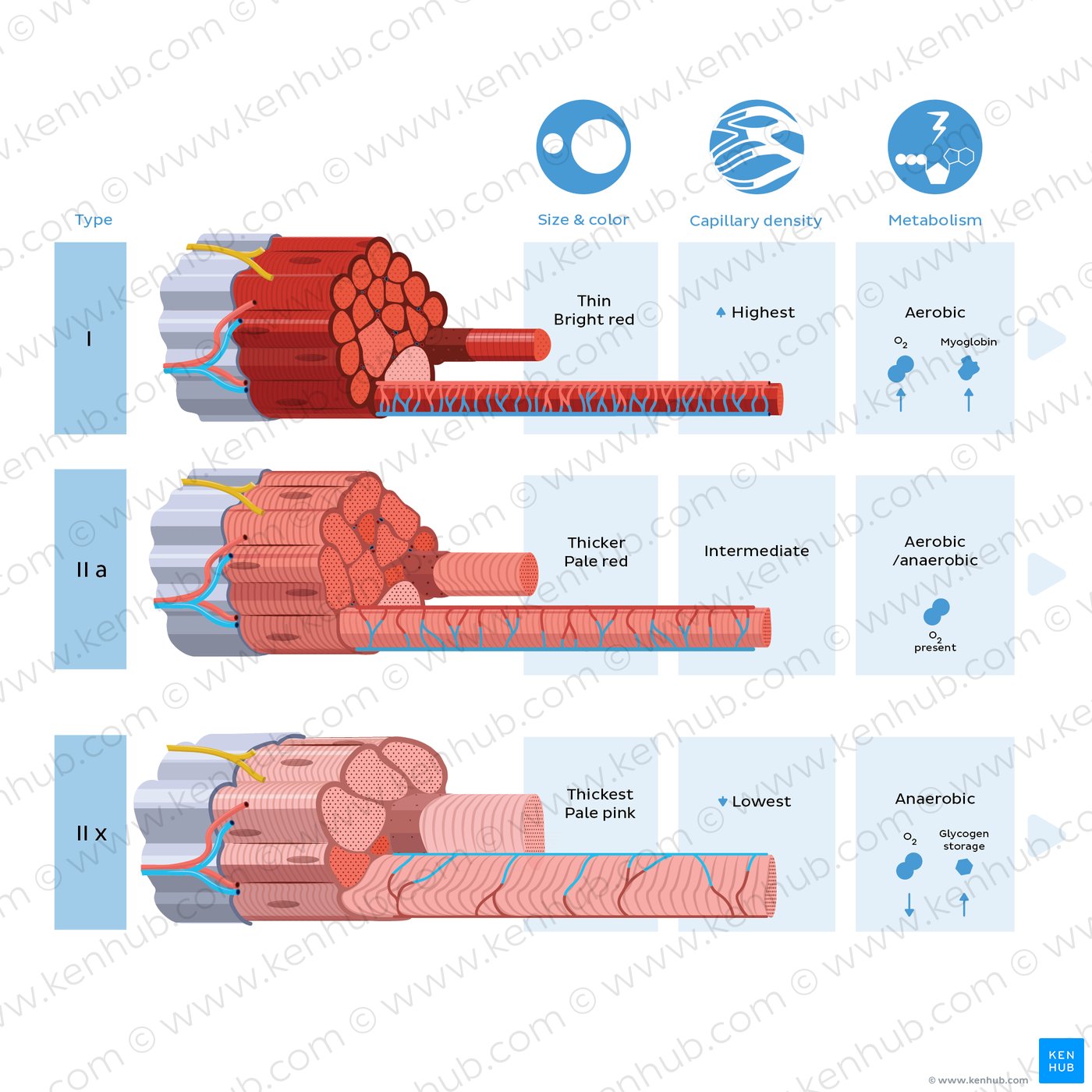
Figure: Characteristics of Type I, IIa, and IIx muscle fibers.
3. Aerobic Respiration & VO₂ Max
Aerobic respiration in mitochondria uses oxygen to convert fuels into ATP. A key measure:
VO₂ Max – The maximum rate of oxygen uptake during intense exercise; a gold‑standard indicator of aerobic fitness.
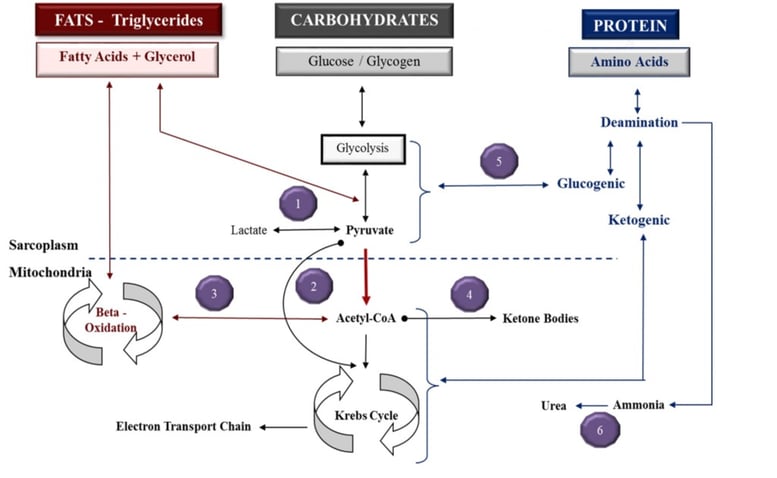
Figure: Mitochondrial pathways for ATP production from fats, carbohydrates, and proteins.
4. ATP Resynthesis & Phosphorylation
Understanding how ATP is regenerated is vital:
Phosphocreatine Shuttle – Rapidly recharges ADP to ATP via creatine kinase.
Oxidative Phosphorylation – Slower but delivers sustained ATP through the electron transport chain.

Figure: ATP hydrolysis and resynthesis pathways, highlighting the phosphagen and oxidative systems.