

What Are Nutrients?
Nutrients are the building blocks your body needs to grow, stay healthy, and perform well. They come from the food and drinks you consume. Every time you eat, your body breaks down that food into small parts-called nutrients-that provide energy, repair muscles, build bones, and keep your organs working
properly.
There are six main types of nutrients:
1. Carbohydrates (Carbs) – Main source of energy
2. Proteins – Repair and build muscles
3. Fats – Long-lasting energy and hormone support
4. Vitamins – Support immunity, energy, healing
5. Minerals – Help bones, hydration, oxygen flow
6. Water – Keeps body temperature and hydration in balance
Why Nutrients Matter in Sports
Athletes need more nutrients than non-athletes. Why? Because sports involve training, sweating, muscle movement, and energy use. If you don’t get enough of the right nutrients, you may:
– Run out of energy during a game
– Feel sore and slow to recover
– Lose focus or become dizzy
– Risk injuries like pulled muscles or fractures
Getting proper nutrients keeps you fast, strong, and sharp-on and off the field.
Key Nutrients and Their Role in Sports
1. Carbohydrates = Quick Energy
Found in rice, pasta, bread, fruits, oats
Use: Stored as glycogen in muscles for fast energy Needed for: Endurance, speed, and high-intensity performance
2. Proteins = Muscle Repair
Found in eggs, fish, chicken, tofu, beans, dairy
Use: Repairs muscle tears after exercise
Needed for: Growth, recovery, strength training
3. Fats = Long-Lasting Fuel
Found in: nuts, seeds, avocado, olive oil, fish
Use: Provides steady energy and absorbs vitamins
Needed for: Longer training sessions and balanced hormones.
4. Vitamins & Minerals = Body Support
Found in fruits, vegetables, whole grains, dairy
Use: Keep bones, blood, and immune system strong
Needed for: Focus, injury prevention, recovery Examples:
– Calcium = strong bones
– Iron = helps carry oxygen
– Vitamin D = supports muscles and mood
5. Water = Performance Booster
Found in: water, fruits (like watermelon), soups
Use: Keeps you cool and hydrated
Needed for: Preventing cramps, headaches, heat exhaustion
What Is a Balanced Sports Diet?
A balanced sports diet includes all six nutrients in the right amounts. Athletes should eat 3-5 meals a day
with:
– Carbs (50-60%)
– Protein (15-25%)
– Fats (20-30%)
– Plenty of water
– Colorful fruits and vegetables
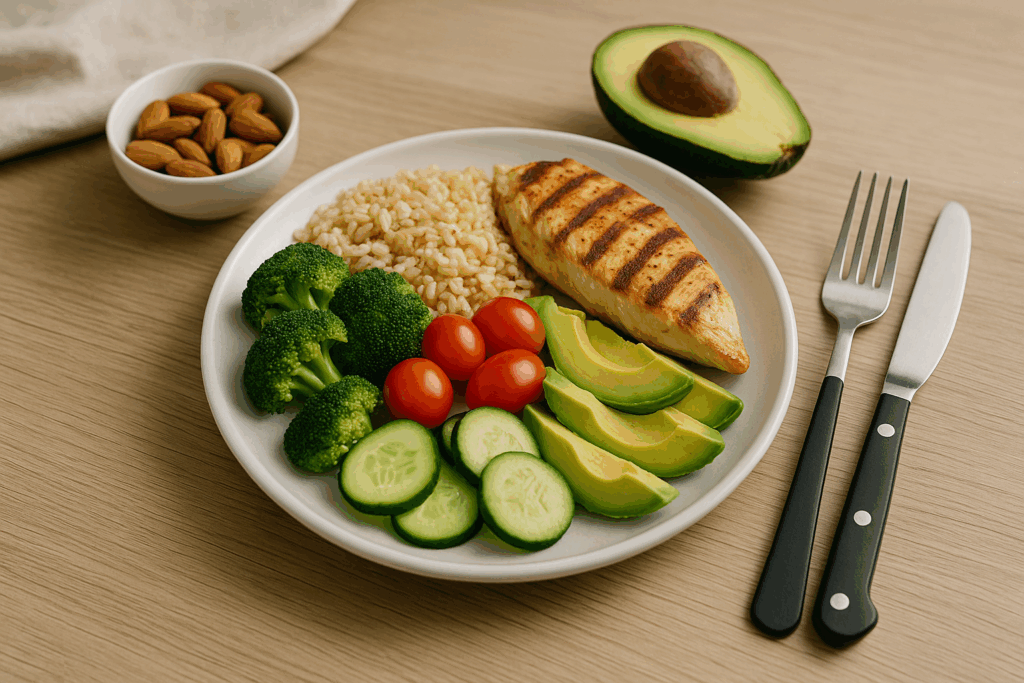
Example meal:
Grilled chicken + brown rice + steamed broccoli + water or a smoothie
Without Nutrients, Performance Drops
Poor eating = poor play. Here’s what can happen if you don’t get the nutrients you need:
Missing Nutrient | What Can Happen?
Carbs | Tired legs, slower reaction
Protein | Sore muscles, weak recovery
Fats | Low energy for long training
Vitamins/Minerals | More sickness, weak bones
Water | Cramps, overheating, dizziness.
Final Tips for Young Athletes
– Eat a colorful plate at every meal
– Drink water throughout the day-not just during practice
– Snack smart with fruits, yogurt, or trail mix
– Talk to a coach or nutritionist if you need a meal plan
– Avoid skipping meals or using supplements as shortcuts