

Understanding the difference between aerobic and anaerobic exercise helps athletes train smarter and reach specific performance goals. These two energy systems work differently – and both are important incomplete fitness programs.
What is Aerobic Exercise?
Aerobic exercises use oxygen to produce energy and are performed at a steady, sustainable pace. They improve heart health, lung capacity, and overall stamina.
Examples
– Jogging
– Swimming
– Cycling
– Brisk walking
– Dancing
– Rowing (long distance)
Benefits
– Improves cardiovascular health
– Increases endurance
– Helps with fat burning
– Reduces stress and improves mood
– Lowers blood pressure and cholesterol
Training Tips
– Perform at least 20-60 minutes, 3-5 times per week
– Keep heart rate in aerobic zone (about 60-75% of max HR)
– Combine with strength training for balance
What is Anaerobic Exercise?
Anaerobic exercises are short and intense. The body creates energy without oxygen by breaking down stored fuels like glucose and creatine phosphate.
Examples
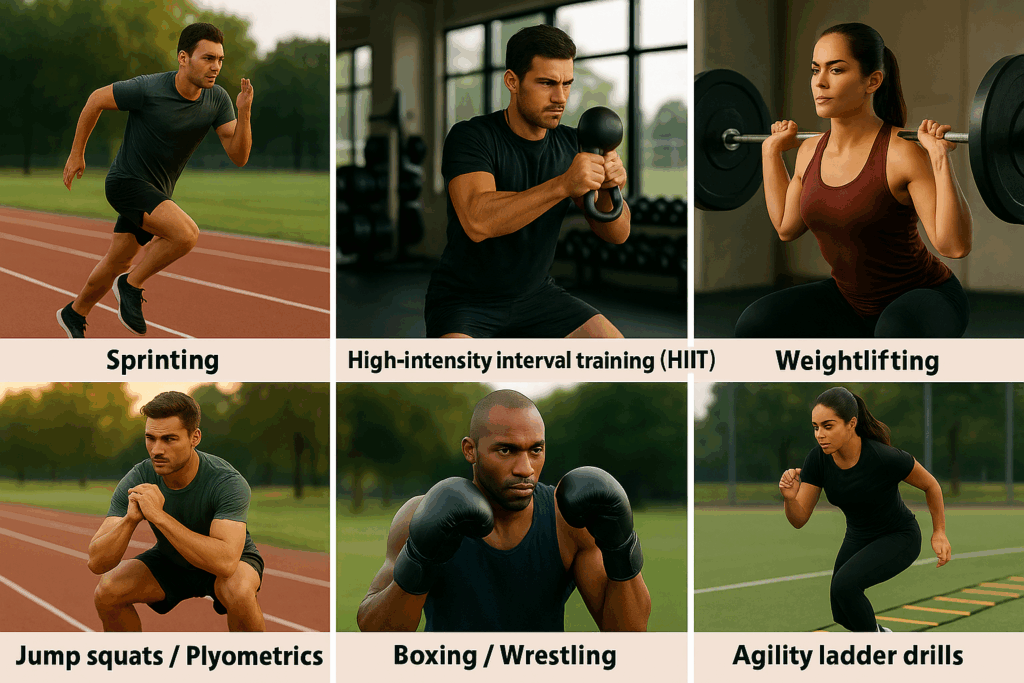
– Sprinting
– High-intensity interval training (HIIT)
– Weightlifting
– Jump squats / Plyometrics
– Boxing / Wrestling
– Agility ladder drills
Benefits
– Builds muscle strength and power
– Increases speed and explosive performance
– Improves bone density
– Boosts metabolism
– Enhances short-burst energy systems
Training Tips
– Keep work periods short (10-60 seconds), with rest in between
– Use good technique to prevent injury
– Ideal for athletes needing speed, strength, and quick reactions.
Combining Both for Performance
Most sports require both systems. For example, A footballer needs aerobic endurance to play 90 minutes, and anaerobic power to sprint or shoot. A boxer uses aerobic energy over several rounds but relies on anaerobic bursts for punching.
Best practice Alternate aerobic and anaerobic training during the week or combine them in circuit or interval formats.
Source: Based on materials from the American College of Sports Medicine (ACSM), World Health Organization guidelines, and NSCA (National Strength and Conditioning Association).