
Ensuring that every athlete trains safely and effectively means tailoring programs to their specific functional abilities. In para sports, this personalization—based on classification and individual strengths—maximizes performance, reduces injury risk, and fosters confidence.
Introduction
Para athletes span a wide range of impairments and functional capacities. By adapting training to each athlete’s classification and ability level, coaches enable everyone—from novices to elite competitors—to progress steadily and safely.
1. Assessing Functional Ability
Before designing a program, evaluate:
Classification Profile: Understand the sport‑specific class (e.g., T54 wheelchair racer, S9 swimmer).
Strength & Range of Motion: Test key muscle groups and joint flexibility.
Neuromuscular Control: Observe balance, coordination, and proprioception.
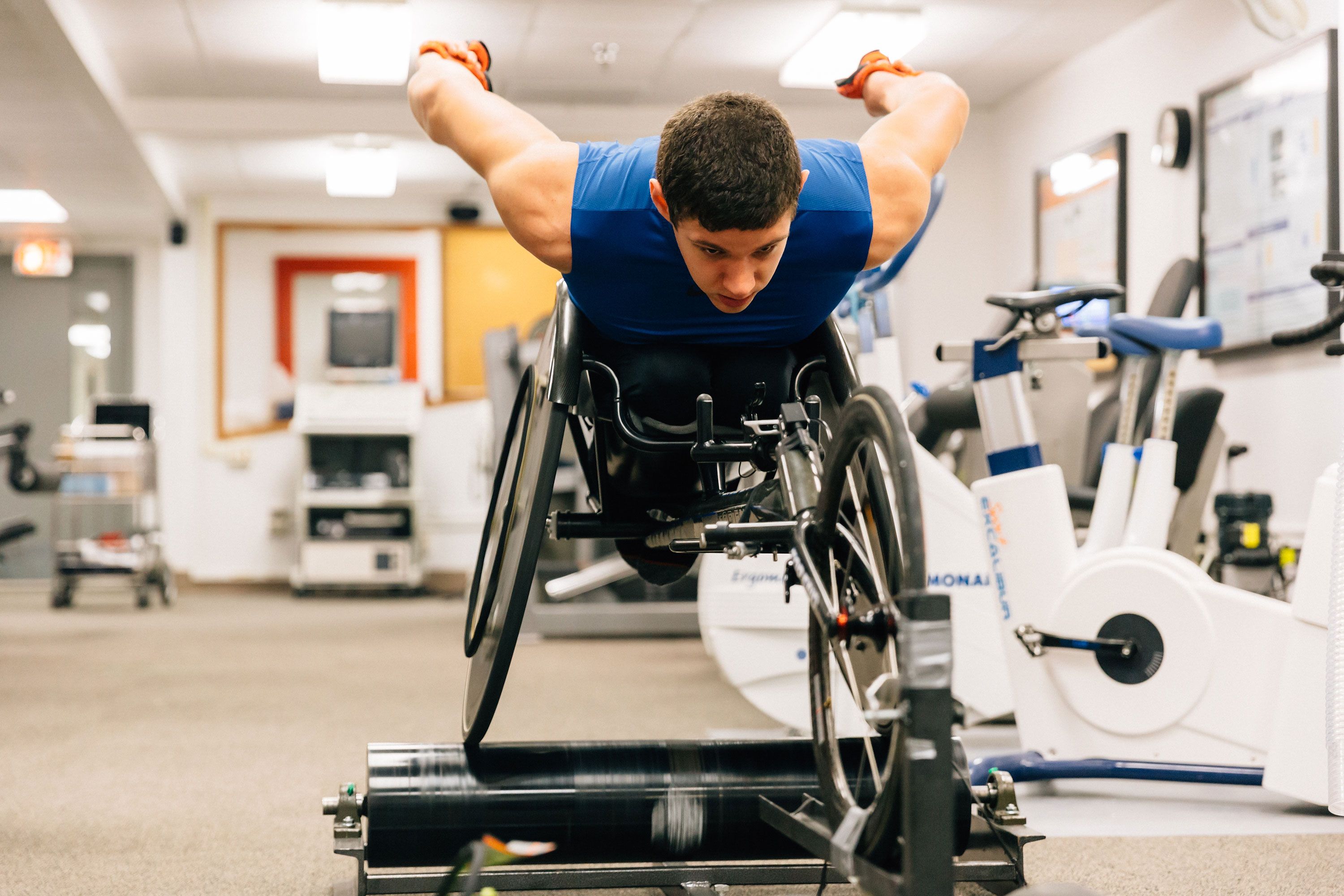
Figure: Classification icons help identify functional profiles across impairment types.
2. Core Principles of Adapted Training
Individualization
Tailor volume, intensity, and drills to the athlete’s capacity—e.g., seated versus standing exercises.Progressive Overload
Gradually increase load or complexity (e.g., add resistance bands, raise bench height for transfers).Specificity
Mimic sport movements in training—wheelchair sprints for T54 racers; pool starts for S10 swimmers.Safety & Support
Incorporate assistive devices (e.g., harnesses, straps) and spotter supervision for unstable movements.
3. Programming Strategies by Ability Level
Novice / Beginner
Focus: Fundamental movement patterns, basic strength, and balance.
Example: Body‑weight seated presses, light-resistance band pulls, hand‑cycle technique drills.
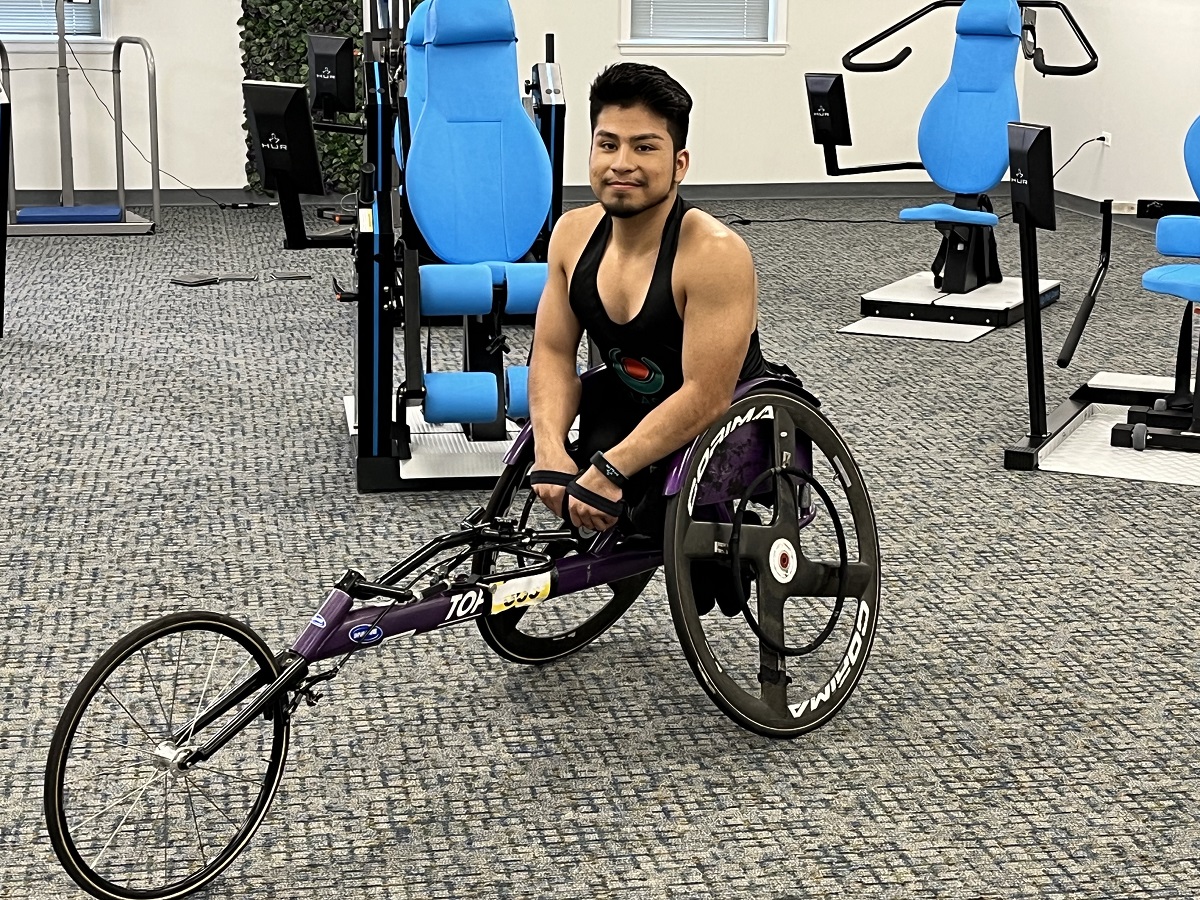
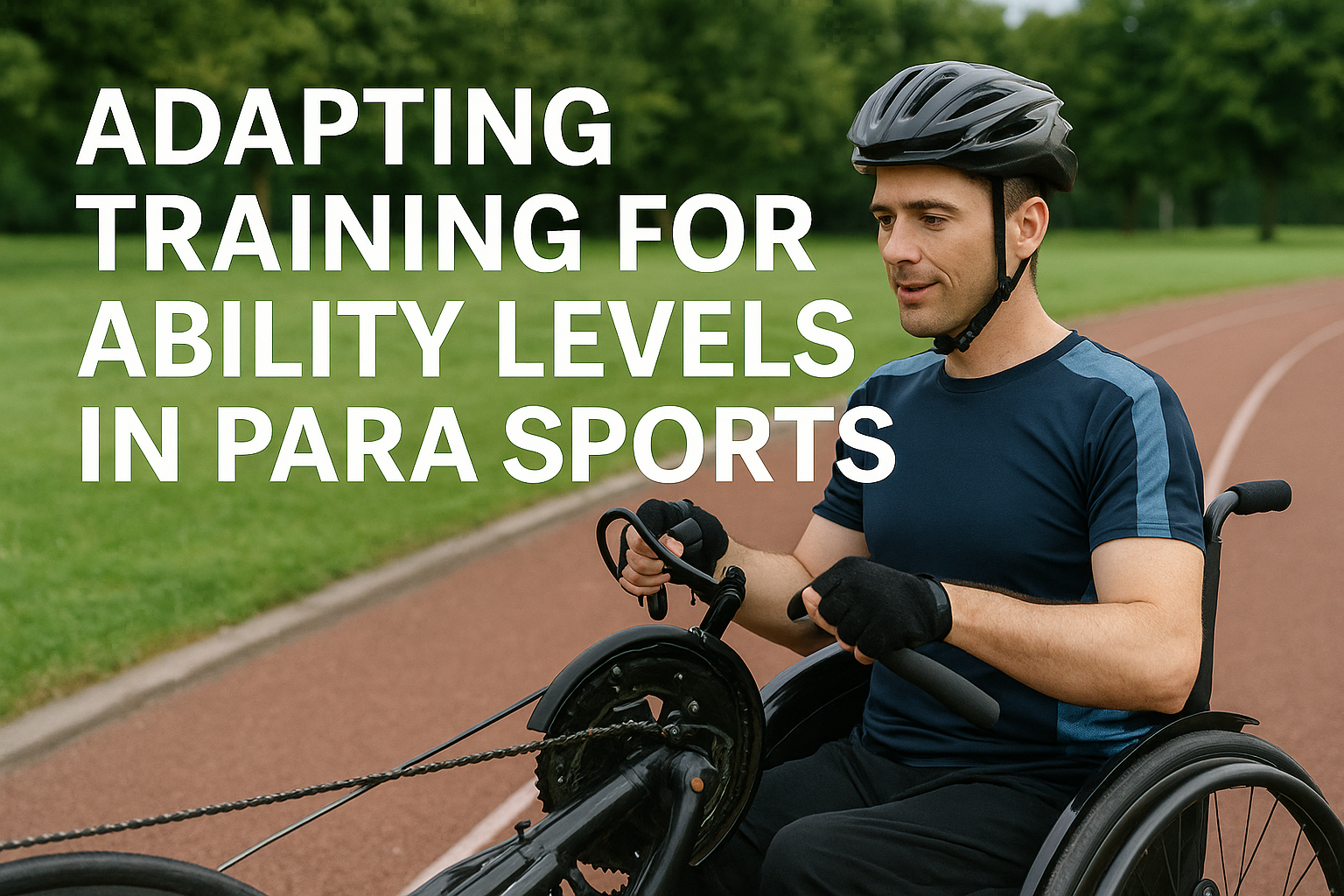
Figure: Beginner wheelchair athlete practicing hand‑cycle technique.
Intermediate
Focus: Sport‑specific endurance and power.
Example: Interval handcycling, modified plyometrics (e.g., medicine‑ball throws from a seated position), dynamic core circuits.
Elite
Focus: Peak power, speed, and technical refinement.
Example: Flywheel resistance sprints in chair, weighted sit‑to‑stand transfers, advanced proprioceptive drills on unstable surfaces.

Figure: Elite T54 racer using flywheel sprints to build explosive power.
4. Monitoring & Adaptation
Data Tracking: Use GPS vests or HR monitors to gauge effort and recovery.
Regular Re‑Assessment: Re‑test strength and mobility quarterly to adjust training loads.
Feedback Loops: Incorporate athlete self‑reports on fatigue and comfort to refine sessions.

Figure: Coach reviews performance data to fine‑tune training plans.
Adapting training for ability levels is both an art and a science. By combining thorough assessment, clear progression, and ongoing monitoring, coaches create empowering, effective programs that unlock each para-athlete’s fullest potential.