
Macronutrients and Hydration: Fueling Athletic Performance
For athletes, eating isn’t just about satisfying hunger – it’s about fueling the body to perform, recover, and grow. The key building blocks of a strong diet are macronutrients and hydration. Understanding these can make a major difference in how you train, feel, and compete.
Macronutrients
Macronutrients are nutrients your body needs in large amounts for energy and function. There are three main types.
1. Carbohydrates (Carbs) – The Primary Fuel
– Function: Provide fast and accessible energy
– Stored as: Glycogen in muscles and liver
– Important for: High-intensity, endurance, and skill-based sports
– Sources: Rice, pasta, bread, fruits, oats, potatoes, quinoa
Tip: Carbs should make up 50-60% of your daily intake, especially before and after training.
2. Proteins – Muscle Repair and Recovery
– Function: Build and repair muscles, enzymes, hormones
– Important for: Post-exercise recovery, strength, growth
– Sources: Eggs, chicken, fish, dairy, tofu, beans, lentils, protein shakes
Tip: Consume 1.2-2.0 grams of protein per kg of body weight per day. Eat protein within 30-60 minutes after workouts.
3. Fats – Long-Lasting Energy and Hormone Support
– Function: Energy storage, hormone production, brain health
– Important for: Low-to-moderate intensity training, joint health
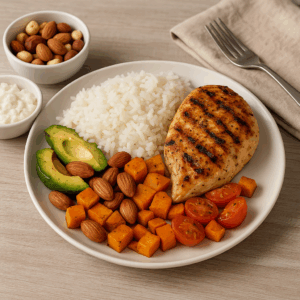
– Sources: Avocados, nuts, seeds, olive oil, fatty fish (e.g., salmon)
Tip: Choose healthy fats and limit fried or processed foods. Fats should make up about 20-30% of your daily
intake.
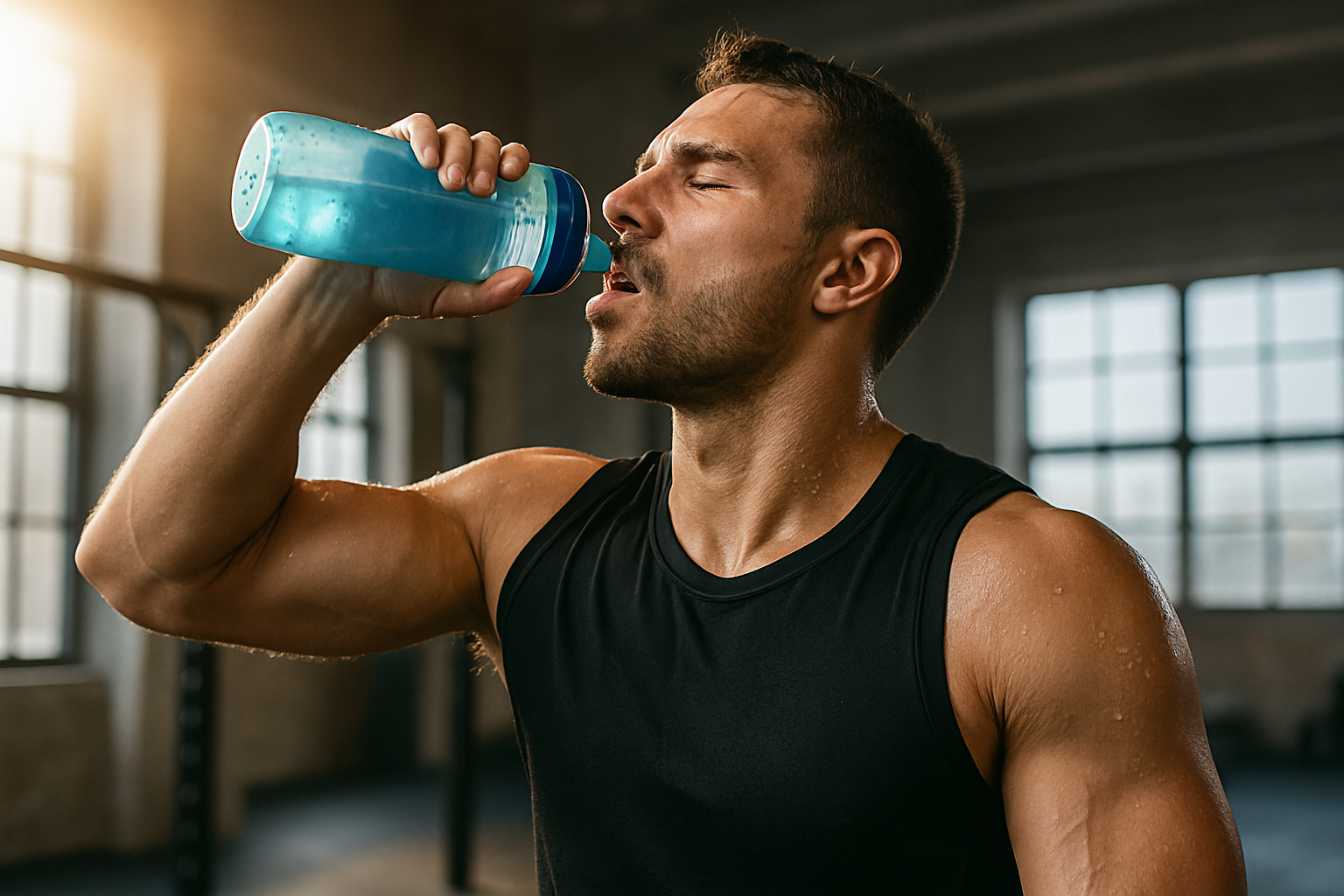
Hydration
Hydration – The Forgotten Performance Booster
Water is just as important as food for an athlete’s body. Even 1-2% dehydration can reduce performance,focus, and endurance.
Why Is Hydration Important?
– Maintains blood volume and body temperature
– Supports muscle contractions and joint lubrication
– Speeds up recovery
– Helps with mental focus and energy
Hydration Guidelines
– Regular Day (no sport): 2-3 liters per day
– Training Day: 3-4+ liters per day (depends on sweat)
– During Exercise: Sip every 15-20 minutes
– After Exercise: Drink 1.5x the amount of weight lost
Tip: Monitor hydration by checking urine color – pale yellow is ideal.
Do You Need Electrolytes?
For training longer than 60 minutes or in hot weather, use drinks with electrolytes (sodium, potassium, magnesium) to replace what’s lost in sweat.
Source
Adapted from International Society of Sports Nutrition (ISSN), US Olympic Committee Nutrition Guidelines, and WHO Hydration Guidelines for Athletes.